

The Kumbasa Noodle House hosted the Gulay Pa More Fiesta in Sagada, a vibrant three-day event held from June 6 to 8 that celebrated the rich culture, biodiversity, and food heritage of Mountain Province. The fiesta attracted around 150 participants, most of whom came from outside the Cordillera region. The event aimed to connect attendees with the lives of Indigenous Peoples and farmers, highlighting their sustainable food system practices.
Gulay Pa More fiesta was organized by the Gulay Na organization, which advocates for food biodiversity, food sovereignty, and a plant-based diet. The group first held this fiesta in Quezon City and Laguna, spotlighting native vegetables and fruits from across the Philippines. Kumbasa Noodle House, a social enterprise managed by the Center for Development Programs in the Cordillera (CDPC), was among the local partners for the Gulay Pa More fiesta in Sagada. Serving as both a restaurant and a small-scale production of fresh squash noodles, Kumbasa aims to support CDPC’s social services for local indigenous communities.
Highlights of the Fiesta

Ms. Celine Murillo
The event opened with a keynote message from Ms. Celine Murillo, a well-known biodiversity documentarist, who shared a powerful reflection: “Kame po sa Gulay Na ay nanininiwala na para ma-reclaim ang ating Philippine flora, ang ating likas at pagkain na pamana (natural and food heritage) – ay kailangan at makilala natin kung saan sila nangga-galing, kailangan makilala natin kung kani-kaninong kamay dumadaan yung mga nasa hapag-kainan natin” (At Gulay Na, we believe that reclaiming our Philippine flora—our natural and food heritage—requires understanding where our food comes from and recognizing the hands that bring it to our tables.)
The fiesta was filled with lively and insightful sharing from local farmers. Participants learned about organic fertilizer production, agroecological farming, muscovado sugar production challenges, heirloom recipes, mushroom foraging, and wine making in Sagada.
Women farmers from Besao, a neighboring municipality, demonstrated how to make foliar fertilizers using banana fruits, trunks, and molasses. They explained the labor-intensive nature of organic farming and the challenge of competing with cheaper, commercially produced goods. Despite these obstacles, they remain committed to organic practices because they believe in delivering healthy food and supporting sustainable agriculture.
Mr. Arnold Timmangao showcased agroecology through his family farm, Raskin Timmangao’s Orchard in Natonin, Mountain Province. He described how flame trees, which bear nitrogen-fixing nodules, naturally enrich the soil and support other crops like lanzones, coffee, gabi, and cacao. The trees also attract birds that help control pests, reducing the need for chemical fertilizers and pesticides. For Arnold, agroecology is a stewardship responsibility—a way to honor nature as God’s creation.
Robert, a farmer from Gueday in Besao, shared insights about muscovado sugar production. He emphasized that their sugarcane is grown without commercial fertilizers but faces pest challenges. Robert invited everyone to visit in April or May to witness the traditional muscovado-making process firsthand.
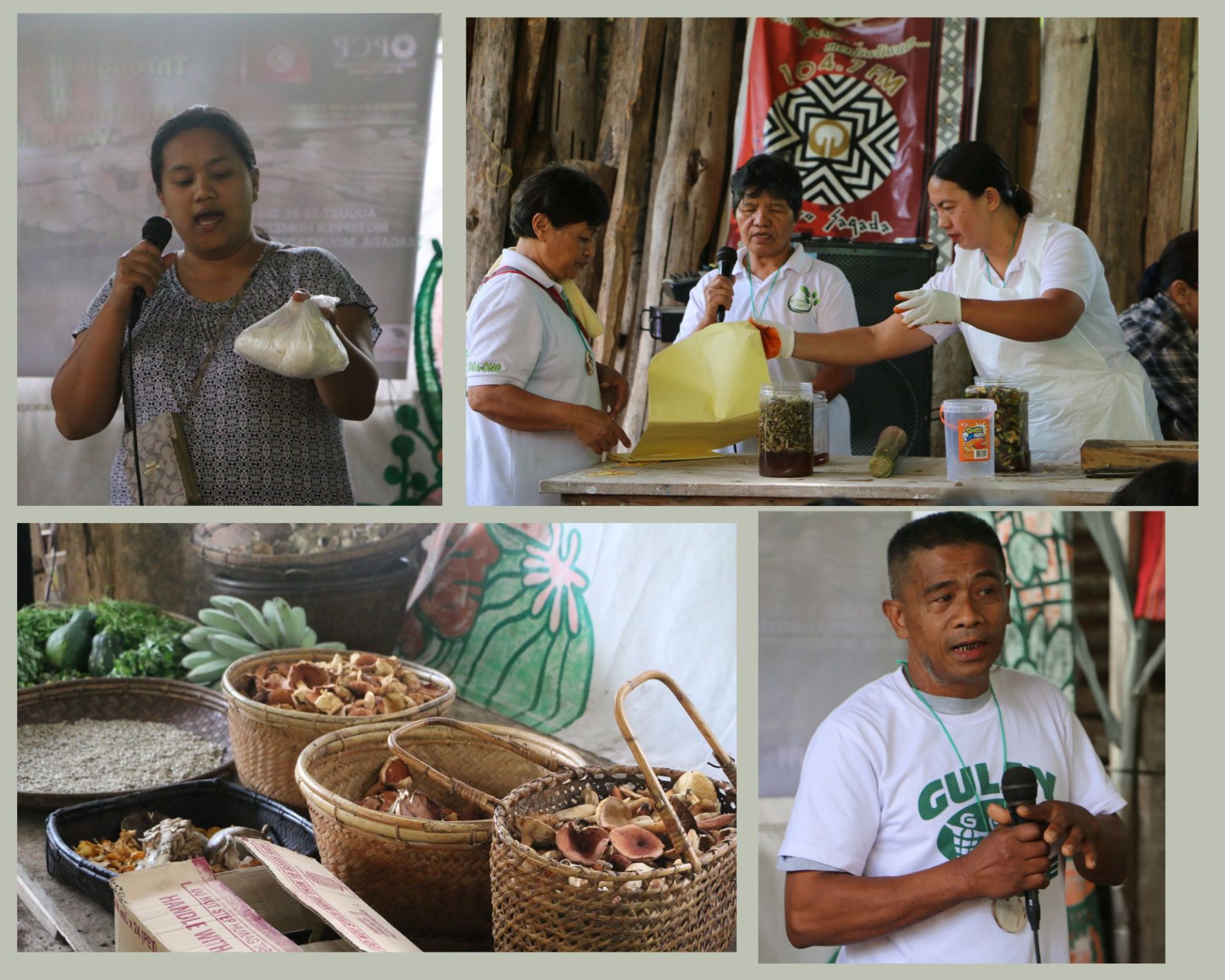
Women from Gueday demonstrated how to prepare linapet, an heirloom dish made from pounded rice, salt, and muscovado sugar, wrapped in banana leaves and steamed. This dish is traditionally prepared during the early agricultural cycle as farmers head to the fields.
Celebrating local ingenuity, Egbert Dailay of Pitik Wines presented his unique honesty wine shop, where customers pay by dropping money into a box without a cashier. His shop is also notable for its use of recycled materials—old phones and bottles incorporated into the building—highlighting his message: wag sayangin yung mga bagay na may pakinabang pa (Don’t waste things that still have value).
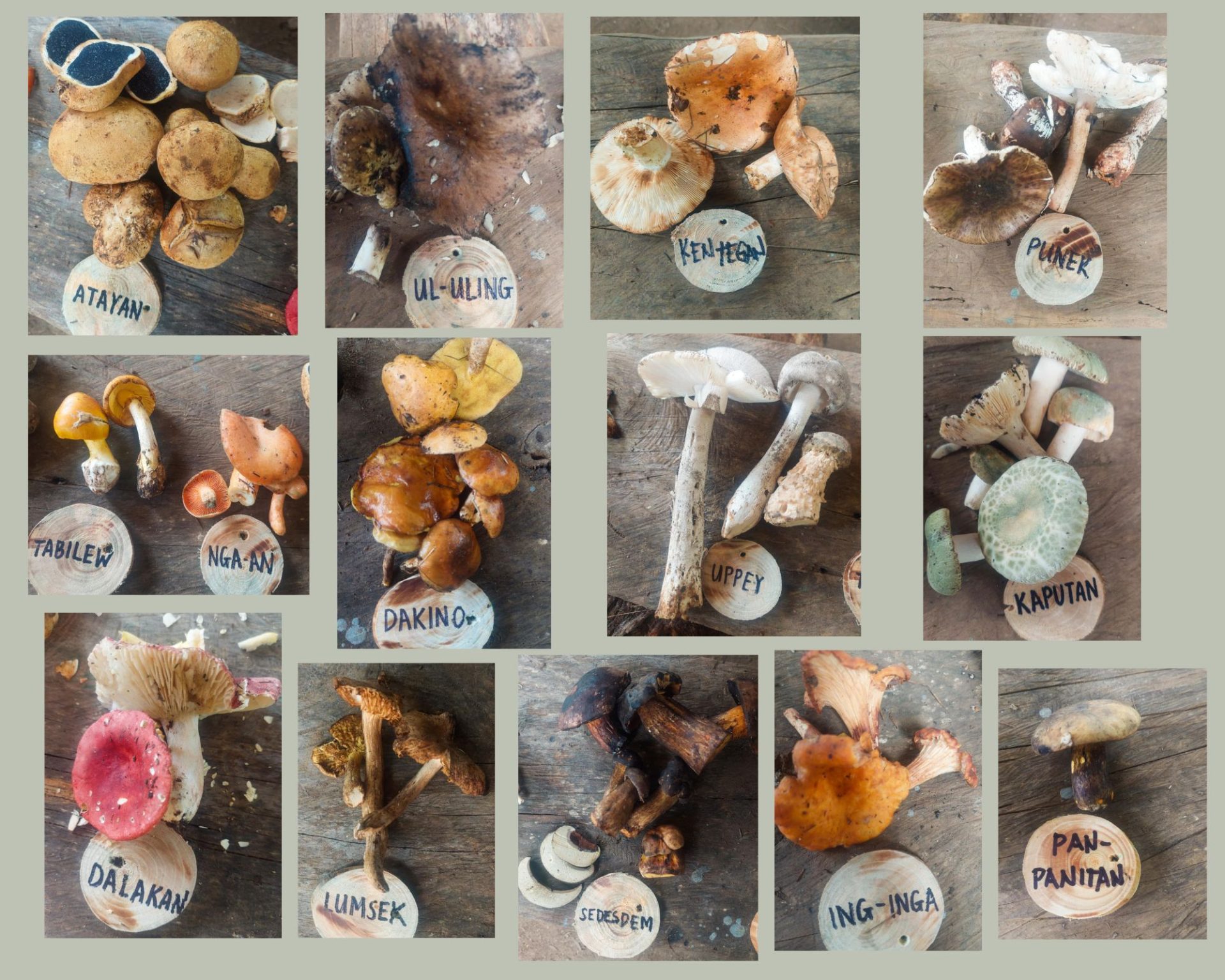
A dedicated session on mushrooms featured Chris Angway, a Sagada local and co-author of The Mushroom Explorer’s Guide to the Cordilleras alongside Marco Lobregat. Chris explained that the rainy season brings an abundance of mushrooms in Sagada and emphasized the local value of Ipeyas Nan Gawis—the principle of sharing nature’s bounty. Participants took part in an actual mushroom foraging expedition, guided by Chris and his peers, discovering a diverse array of mushrooms varying in color, size, and taste. The foraged mushrooms were sorted by their local names and became the star ingredients in a community cooking activity, where participants formed teams to prepare their own dishes.
The fiesta was not only a celebration of food but also a rich exchange of knowledge directly from the producers.
Growing Connections: Building a Mycelial Network Like Mushrooms
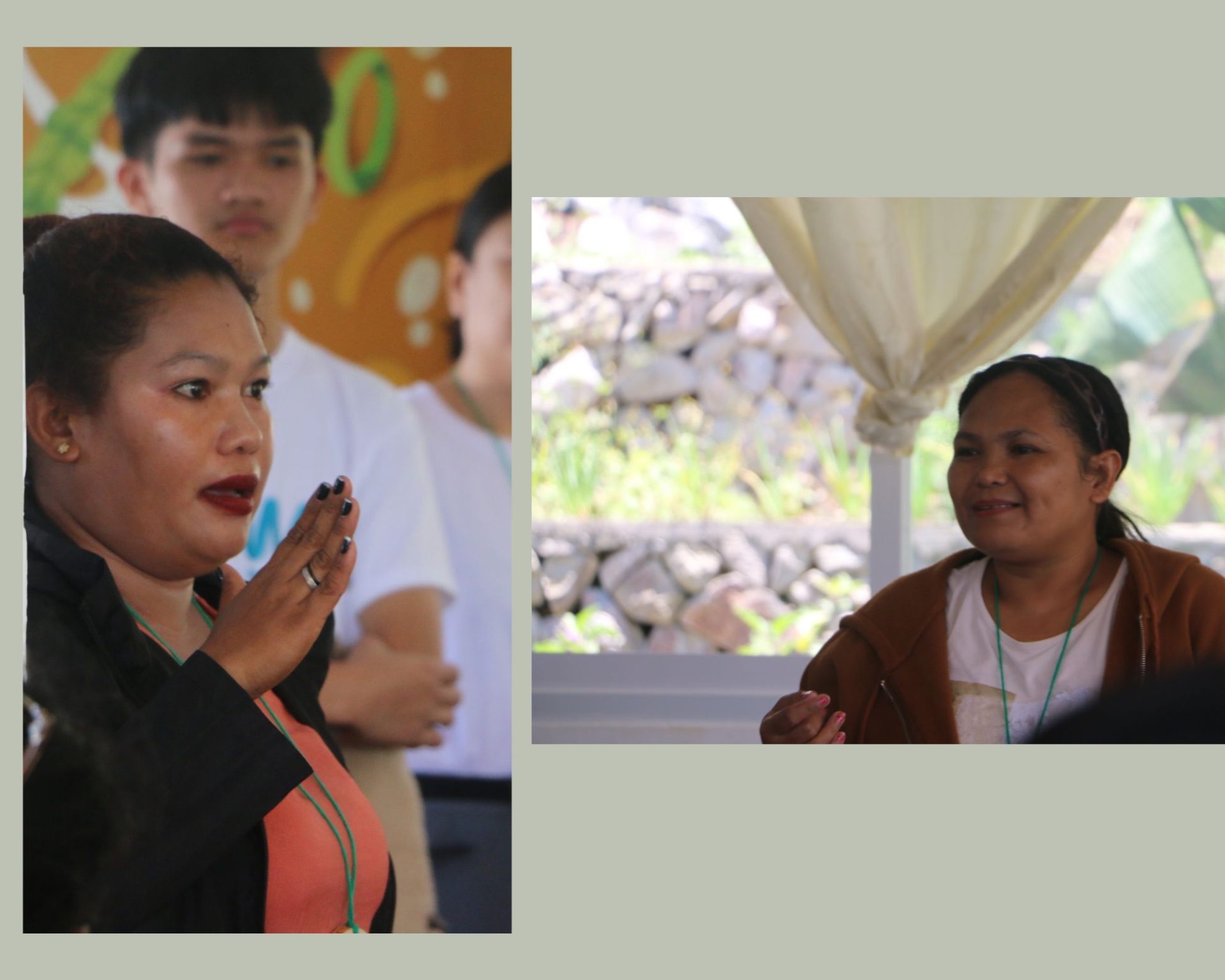
Ms. Diwata and Ms. Clars (from left to right)
Agta people from Bataan and Cagayan also attended the event. Ms. Clars from Bataan realized that there are many similarities between their culture and that of the Cordillera people. In terms of nature, both cultures share a deep care and respect for the environment. When it came to food, she initially thought their simple dishes were too modest to share. But upon coming here, she said “hindi pala nakakahiya yung meron pong mga ideas na pwede po namin palang ishare sa ibang tao kung ano po yung mga kaugalian, na meron kami katulad po ng nakikita ko rito. Kaya po excited po ako sa pag uwi ko sa amin baon baon po sa komunidad ko yung mga bagay na natutunan ko.” (I realized that it is not embarrassing; there are ideas that we can share with other people about our customs, which we have, just like what I see here. That is why I am excited to go home, bringing with me to my community the things I have learned)
In contrast to the mountainous terrain of the Cordillera, Ms. Diwata from Palaui Island in the municipality of Santa Ana, Cagayan, shared that her community comes from the sea, where shells, sea grass, and fish are abundant. She said: “Dito ko nakita yung ibat-ibang klase ng ng mushroom… ang mushroom lang kase sa amin ay nasa palayan o yung mga mushroom sa mga saging…nung first time ko po dito parang ignorante ako sa lahat sa mga ibat-ibang gulay kasi isang gulay lang naman kasi sa amin yung mga pakbet ganun lang”
(This is also where I saw the different kinds of mushrooms… because the only mushrooms we have are in the rice fields or the mushrooms on the banana plants. [It is also my first time to visit Sagada] I felt like I was ignorant about all the different vegetables here, because back home, [we are only familiar to vegetables we used in cooking pinakbet)
She also noted a parallel between the challenges faced by farmers in the Cordillera and the fishermen in her own community. The fishermen must travel great distances to fish, yet their catch is often sold at very low prices.
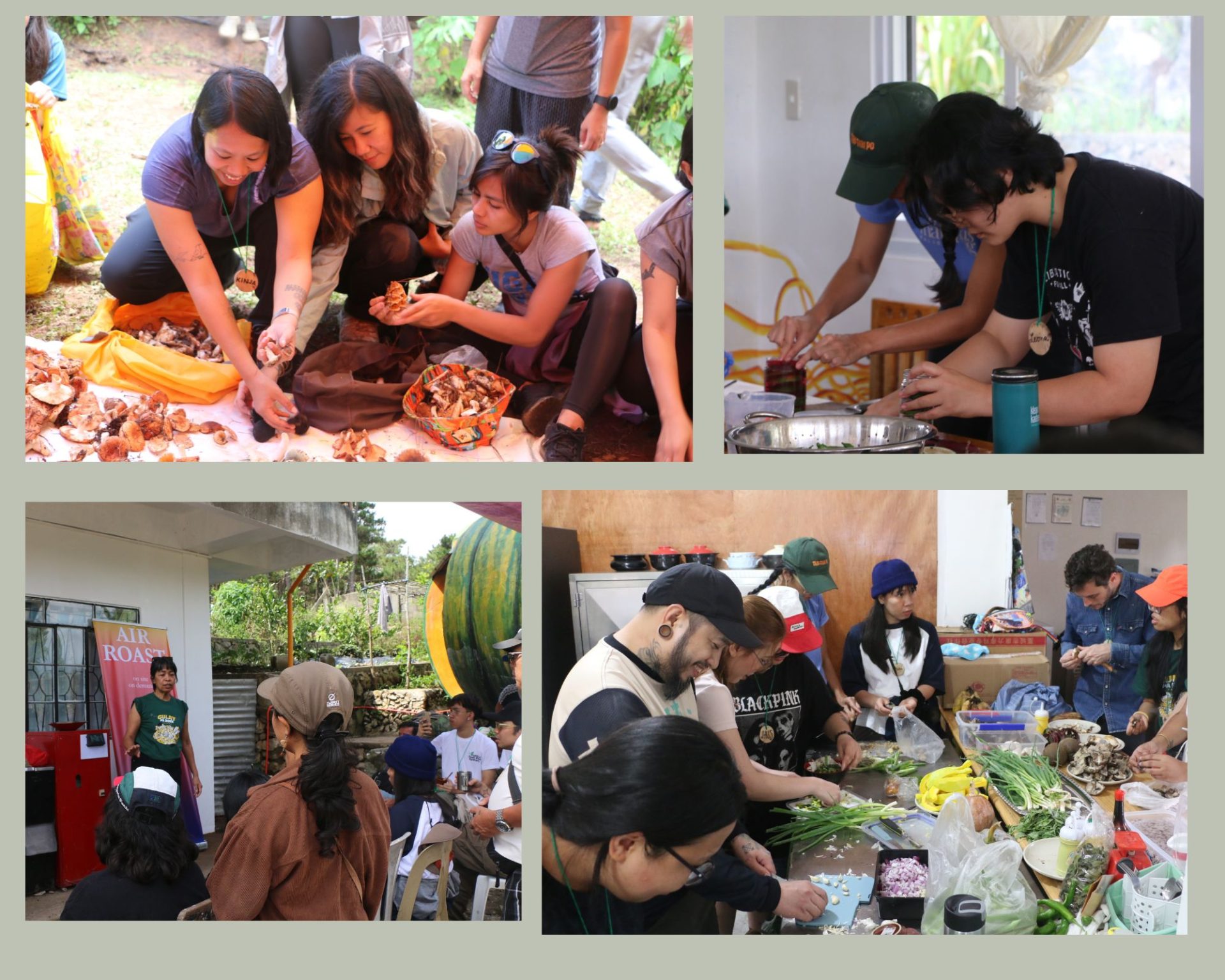
The fiesta clearly served as a platform for cultural exchange between the Agta people and the Cordillera community. Despite their different contexts, they share significant similarities, including abundant natural resources and a unique relationship with nature. They face common challenges that can foster a sense of solidarity between them.
Furthermore, Kumbasa Noodle House draws inspiration from Chef Waya Araos-Wijangco’s advocacy to address the challenges faced by farmers. Farmers often bear all the risks and hard work in production but receive minimal benefits because transporting their produce is difficult, and they frequently have to rely on middlemen. To tackle this, their network of chefs and restaurants provides farmers with a direct market by purchasing produce straight from them. What began as a small initiative has since grown into a larger network that connects farmers directly with restaurants, ensuring fairer returns for the farmers. We also aspire this advocacy—buying vegetables directly from local farmers in Sagada to serve healthy dishes to the community. It promotes the farm-to-table concept while providing farmers with an additional market for their produce.
We at CDPC, takes the Gulay Pa More Fiesta as a valuable opportunity to connect with like-minded individuals and organizations dedicated to sustainable food systems. Such systems prioritize environmental protection, the welfare of farmers, the delivery of healthy food to consumers, and the recognition of Indigenous Peoples’ rights. This event marks a promising beginning for a network committed to advancing these important goals.
As Ms. Celine Murillo emphasized: “katulad ng mga damayan at nang kanilang malawak at malawak na mycelial network – bubuo tayo ng mga ugnayan, magsasalo-salo ng kape, kagulayan, at kabute – at malalaman muli at maalala natin na – ang lupa ay buhay (life) – at ang lupa ay buhay (alive).”
(Like the damayan (kankanaey term of mushrooms) and their vast, expansive mycelial network—we will form connections, share coffee, vegetables, and mushrooms—and we will once again know and remember that—land is life—and the land is alive)
The Gulay Pa More network plans to explore the possibility of partnering with the municipal government of Sagada to institutionalize the event as an annual celebration in the town.#PICTeam